Make This Easy To Digest…ion
If you think digestion is just about what happens in your stomach, think again! Digestion is like a well-coordinated team, with multiple organs and processes working in sync. Every part of the digestive system plays a vital role, from that first bite of food to the final absorption of nutrients. And when one part is off, the whole system can feel it. Let’s break down how your digestive system works, and how you can support it with simple tips.
Your Digestion Dream Team: How Your Gut Plays the Game of Digestion
Think of your digestive system like a sports team, where each player (or phase of digestion) plays a crucial role in success of the team. Digestion happens in three phases, pre-game, the game, and post-game.

The Key Players of the Digestion Game
Pre-Game: Cephalic Phase
Every great game starts with preparation, and digestion is no different. The cephalic phase is the warm-up. When you see, smell, or even think about food, your brain sends signals to your digestive system to get ready.
During pre-game:
Mouth: Your saliva flows as you chew, loaded with enzymes that break down food before it even hits your stomach.
Stomach: Your stomach starts producing acid and digestive enzymes, gearing up to break down proteins and nutrients.
This phase highlights the importance of being mindful while eating. You can optimise digestion by sitting down, appreciating your plate, and engaging all your senses.
The Game: Gastric Phase
Once food transitions through the esophagus and enters the stomach, it’s game time. The gastric phase is where the heavy lifting happens.
During the game:
Stomach: Your stomach works as the team’s powerhouse, using stomach acid and digestive enzymes to break down proteins and kill harmful bacteria.
Muscles: Your stomach muscles churn food, mixing it into a substance called chyme, ready to move on to the small intestine.
The gastric phase is where digestion hits full force, as enzymes and acid team up to break down food and prepare it for nutrient absorption.
Post-Game: Intestinal Phase
After the stomach has done its job, the real MVPs take the field. The intestinal phase includes the work of the small and large intestines.
Small Intestine: This is where the bulk of nutrient absorption happens. It’s your captain, efficiently absorbing vitamins, minerals, and amino acids into your bloodstream.
Large Intestine: This is the team’s defence. It absorbs water and forms waste, preparing it for elimination.
During post-game:
Nutrient Absorption: Vitamins, minerals, and amino acids are transported to various parts of your body for energy and repair.
Gut Health: The fibre in your diet feeds beneficial gut bacteria, keeping your microbiome in balanced harmony.
Waste Elimination: The large intestine wraps things up by preparing waste for elimination, ensuring your digestive system is ready for the next round.
This phase also emphasises the importance of recovery, proper rest, hydration and a balanced, nutrient-rich diet is required to have a successful intestinal phase.
Factors That Impact Team Performance
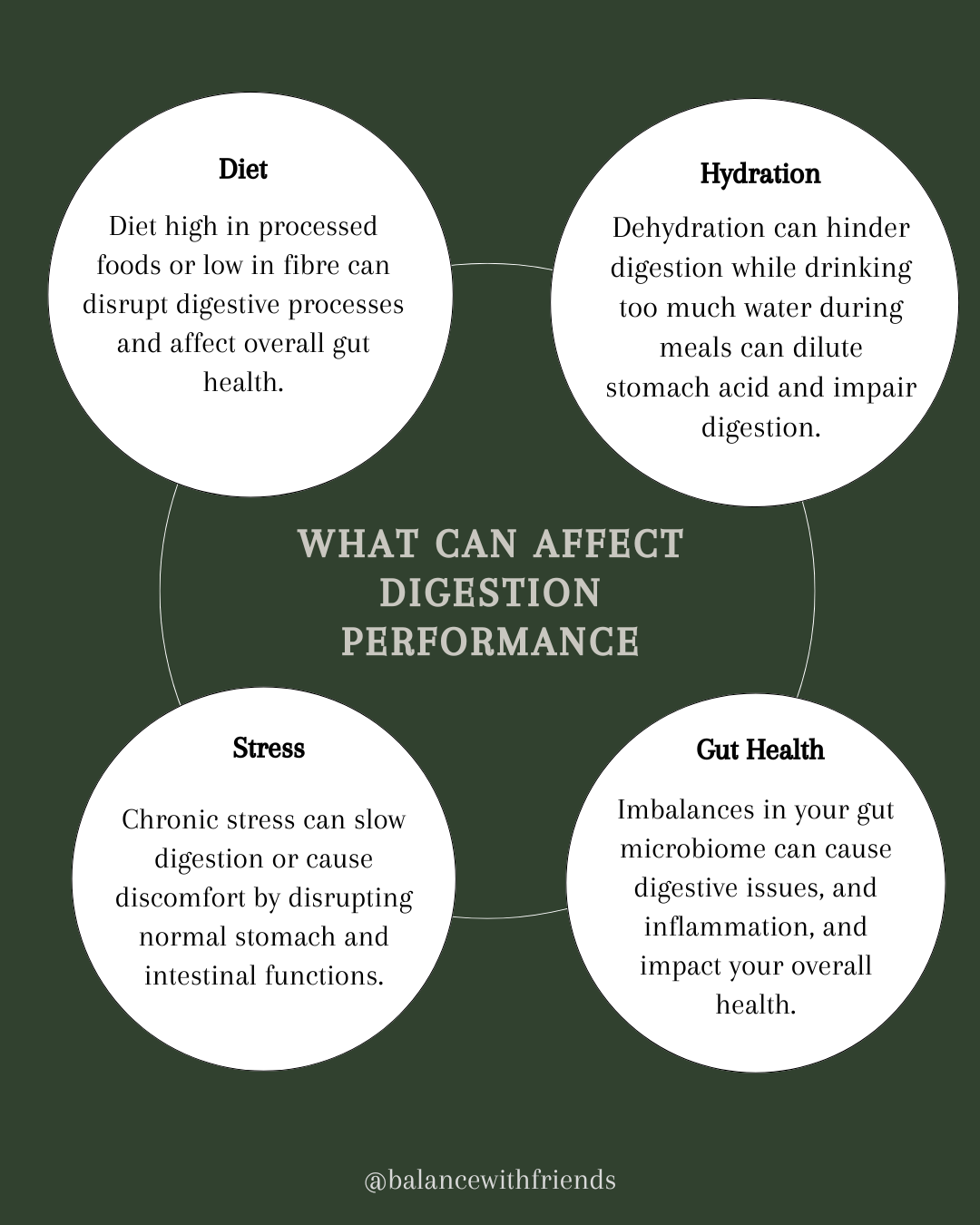
For any team to perform well, several external factors need to be in check. Similarly, certain factors can affect the performance of the digestive system:
How To Support Your Digestion
Here are seven strategies to help keep your digestive system performing at its best:
Chew your food thoroughly: The more you chew, the easier it is for your stomach to break down food. Aim for 15–20 chews per bite.
Stay hydrated: Drink plenty of water throughout the day, but avoid large gulps during meals, as it can interfere with stomach acid.
Breathe before eating: Take a few deep breaths before meals to activate your body’s “rest and digest” mode, signalling to your system that it's time to eat.
Create a calm eating environment: Sit down to eat, avoid distractions like phones or TV, so you can enjoy your food mindfully.
Take a walk after meals: Gentle movement after eating helps stimulate digestion and regulate blood sugar levels.
Eat a balanced diet: Focus on whole foods rich in fibre, like fruits, vegetables, whole grains, beans, and legumes.
Listen to your body: If certain foods consistently cause discomfort, it may indicate an intolerance or sensitivity. Pay attention and adjust your diet accordingly.
For some people, digestion can be more complex due to medical conditions like coeliac disease, irritable bowel syndrome, or food allergies. If you suspect a more serious issue, consult a healthcare provider to develop a personalised plan.
Play the Long Game for Gut Health
Your digestive system is finely tuned and each organ plays a critical role in your overall health. Supporting your gut with good habits like eating a balanced diet, staying hydrated, and managing stress, will help keep your digestion on track in the long term.
So, next time you sit down for a meal, remember your digestion team is always working behind the scenes, be sure to support it.
With love and balance, my Friends x
